


Just Before Your Next One, Read This | Reflection
Next Time!
Next time you have the urge to smoke some weed, joints, tobacco… stop for ten seconds. Breathe, for ten seconds. Might you be numbing your pain by smoking it away?
My Story with Smoking
When I first started smoking joints, I told myself I was just doing it because it helped me sleep. Just a few puffs before bed, every night. And every night it was, for such a long, long time… What began as a few puffs started becoming a habit, and what became a habit started causing anxiety. I was lying in bed for hours with racing thoughts, fast breath, and sleepless nights. Yet, I still did it.
What Was Going On?
Reflecting on that period in my life, I realized that I was simply unhappy. I was surviving in living rather than living from a place of strength, love, and presence. Although I was surrounded by a loving relationship, I was still not satisfied with who I was, my own history, and what I thought of myself.
So, What Was I Doing?
I was literally numbing whatever was going on inside of me. I pretended that everything was fine, but in fact, I had a lot of shadow work waiting on a list. And the only way I could hold it off was by numbing it. I tried to smoke it away. And that was no fun. At a certain point, my body stopped accepting it: the anxiety, the smell intolerance, the coughing…
Numbing pain with smoking and where to begin?
What worked for me was finding out the reason why I smoked. And when I realized the reason, I committed to myself to start working on it. Whether through self-learning, journaling, books, coaching, or therapy, I did the work. And the work isn’t fun. It’s tough work. And I also realized how important this work is for my own happiness and wellbeing and for those around me.
Just Before Your Next One, Read This
Next time you have the urge for some “fun” or some “relax chill time,” please just check your intention. Is there hidden pain there that needs your attention? Might there be something inside you asking for attention? Maybe it’s time for you to have a look, no matter what the price is.
One glance at a time. One step at a time. At your own pace.
Enjoy my other reads:
Stop Blaming Your Parents: Turning Mindfulness into Self‑Responsibility. On this link.
Living in Peace: How to Find Inner Peace in this World? On this link.
How to Transform Self-Sabotage with Mindfulness and Love? On this link.
Emotional Identity and Pain: Who Are You Without the Struggle? On this link.
External Resources:
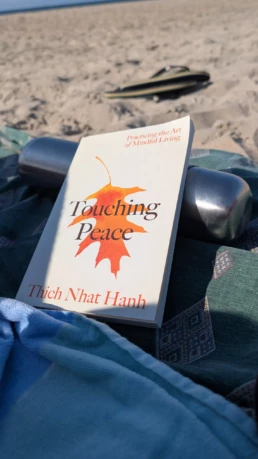
Zen & Engaged Buddhism:

War Begins Again When Those Left Behind Try to Live | Reflection
A Brief History
I was born in 1988, during the brutal final stretch of the Lebanese Civil War — a war that raged from 1975 to 1990. Those last years were chaos: factions fighting for power, influence, and survival, while ordinary people tried to cling to life.
Away from the politics and headlines, a child was born that year — nameless for months until my late aunt gave me my name: Ashraf.
War Begins Again When Those Left Behind Try to Live
As a child, I never understood why I felt so anxious, restless, and disconnected. Wherever I was, I wanted to go home. To feel safe. I couldn’t explain it, and no one — not even my parents — could see it.
I remember feeling trapped inside my own skin, wanting to crawl out of my shoes, my clothes, my body, to escape that unnamed tension humming inside me. I didn’t know it then, but that was my first inheritance from the war.
My Mother’s Fear, My Fear – Born in War
That fear wasn’t just mine — it was hers.
When she was pregnant with me, bombs were falling on our village. She and my family fled into a bunker, carrying that terror in their bodies. She used to say, “That was the norm back then.” But trauma doesn’t disappear just because we normalize it. It buries itself deep.
And I carried it with me, even before I was born. That constant hypervigilance — that readiness to run, to hide, to never fully rest — became my quiet companion.
Growing Up in the Shadow
In school, I was bullied for years. I didn’t understand why it had to be me, or why I kept it to myself, never telling my parents. Something in me couldn’t connect, couldn’t interact, couldn’t live the life I quietly fantasized about.
Until I was eighteen, I felt like I was always on the run — under attack, unsafe, unprotected, and always alert to flee. That feeling shaped me in ways I still uncover.
War, Again
In 2006, war found me again. Israel’s assault on Lebanon didn’t just shake the ground around me — it shook something deep inside me, something that had been waiting since birth.
Living through that second war carved new layers onto old wounds. It taught me how deeply war embeds itself in the body and how long it lingers after the bombs stop falling.
The Cost of War
I share this reflection now, as wars erupt across the world, to remind us: every war scars generations.
When we support war — actively or silently — we do more than destroy lives in the present. We strip ourselves of our humanity and forgo our kindness, empathy, integrity, and peace and all our values, not just from others, but from ourselves.
We hand that suffering to our children, and they to theirs. And those we’ve inflicted violence on? They carry it forward too. This is how war sustains itself — a vicious cycle of trauma and retribution passed down, generation to generation.
A Call to Reflect
I think of the children of Ukraine. The children of Palestine.
What are the chances they will grow up without anger, without hatred, without a desire for revenge? What are the chances that this cycle won’t repeat, fed by our silence, our support, our detachment?
My story is just one thread in this tapestry.
I leave you with this to reflect:
War doesn’t end when the bombs stop. It begins again when those left behind try to live.
Enjoy my other reads:
Recover Your Sovereignty: On this link.
Stop Blaming Your Parents: Turning Mindfulness into Self‑Responsibility. On this link.
Living in Peace: How to Find Inner Peace in this World? On this link.
How to Transform Self-Sabotage with Mindfulness and Love? On this link.
Emotional Identity and Pain: Who Are You Without the Struggle? On this link.
External Resources:
Zen & Engaged Buddhism:

How Avoiding My Triggers Hindered My Growth
How Avoiding My Triggers Hindered My Growth
For many years, I thought avoiding certain people and situations was a sign of growth. I felt less agitated, less angry, and less reactive. From the outside, that looked like progress.
Looking back, I see it differently. Avoidance gave me distance from difficult emotions, but it did not necessarily help me understand them. I was pushing away frustration and anger from my teenage years, fear of abandonment from childhood, and a need for control that I connect, in part, to being born into and witnessing war in Beirut.
As I began bringing mindfulness to these reactions, I became more curious about what was happening inside me. Instead of treating every strong reaction as proof that something outside me was wrong, I started asking what the reaction might be showing me about my own history, fears, and needs.
This article is a personal reflection, not a clinical explanation of trauma or emotional triggers. I use the word “trigger” in the everyday sense to describe a situation that brings up a strong emotional reaction. In clinical contexts, triggers can also refer to reminders of traumatic experiences, which may require support from a qualified mental health professional.
When Not Being Triggered Felt Like Progress
For a long time, distance felt peaceful. If I avoided the people or situations that stirred something in me, I could tell myself that those feelings were no longer part of my life. I was fine. Life was fine.
But that calm depended on keeping certain experiences at a distance. When I could not avoid them, the same emotions returned. That was when I began to question whether I had actually changed my relationship with those feelings or had simply arranged my life so that I encountered them less often.
This does not mean that avoidance is always harmful. Distance can be necessary when a situation or relationship is unsafe. In my case, however, I began to see that some of my avoidance was protecting me from discomfort rather than protecting me from harm.
When a Relationship Held Up a Mirror
What I had considered progress required very little engagement with the parts of myself I found difficult. I had created distance, but I had not necessarily developed a deeper understanding of my experiences or how they influenced the person I had become.
Years later, my relationship with my former partner challenged that understanding. The relationship sometimes held up a mirror, bringing reactions and patterns into view that I had been able to avoid before.
The relationship did not create everything I felt, and not every difficult moment was a repetition of my past. But it gave me opportunities to notice how quickly old fears, anger, or a desire for control could enter a present interaction.
Looking back, I feel grateful for what I learned. It helped me question some of the walls I had built and recognize how much I had compartmentalized my feelings. Growth, for me, began not when I stopped reacting, but when I became willing to look at my reactions with greater honesty.
Meeting Strong Reactions With Curiosity
Mindfulness gives me a way to stay with a reaction before deciding what it means or how to act. The pause does not make another person’s behavior acceptable, and it does not mean that my reaction is irrational. It simply gives me an opportunity to understand more of what is happening.
Sometimes a strong reaction fits the situation. Anger may point toward unfairness, harmful behavior, or a boundary that needs attention. At other times, the intensity seems greater than what is happening in the present moment. That difference becomes a cue for me to pause and become curious.
One example for me is political disagreement. I may have a clear opinion, but when I notice the intensity rising, I try to look beyond the opinion itself. I ask:
- What happened just now?
- What am I feeling in my body?
- What story am I telling myself about this situation?
- Does this feeling remind me of an earlier experience?
- What response fits what is happening now?
These questions do not always produce an immediate answer. Their purpose is to create enough space for me to respond with greater awareness rather than assuming that the first story my mind produces is the whole truth.
What I Learned From Turning Toward My Reactions
I no longer believe that every uncomfortable reaction must be eliminated. I also do not believe that every reaction needs a deeper interpretation. Some feelings pass when I acknowledge them. Others reveal a repeating pattern that may be worth examining.
When I stop treating a reaction as an enemy, I can ask what it needs from me. Sometimes the answer is a boundary, an honest conversation, rest, or distance. Sometimes it is recognizing that an old fear has entered a present situation.
Mindfulness does not guarantee healing or prevent future reactions. For me, it offers a way to meet them with less avoidance and greater honesty. That can create room for understanding and a more deliberate choice.
It is not easy work. But for me, it is part of the work that brings me home to myself.
If you would like a structured space to explore a repeating reaction in your own life, one-to-one coaching can help you examine what is happening and consider how you want to respond.
Related Reading
- Why Do You Self-Sabotage When Things Are Going Well?
- Anxious-Preoccupied Attachment: My Experience With It
- Is Awareness the Same as Freedom?
Sources and Background
- Trauma Reminders: Triggers, National Center for PTSD
- Meditation and Mindfulness: Effectiveness and Safety, National Center for Complementary and Integrative Health
- Handling Strong Emotions, Plum Village

Feeling Overwhelmed by Personal Growth? Here’s What Helped Me | Reflection
Feeling Overwhelmed by Personal Growth?
The feeling of being overwhelmed by personal growth is common. I’ve experienced it myself—the internal questions like:
“When will I stop feeling like this?”
“When will I finally get better?”
“I’m 36 and I still can’t get a grip on my thoughts when they take over.”
That inner urgency to feel better, especially in darker moments, can be counterproductive. It can make us feel more broken, more behind, more stuck. But there’s something that’s helped me...
The Wisdom of Impermanence
Over 3,000 years ago, a wise teacher said: “Everything is impermanent.”
That includes our thoughts, our emotions, our anxiety—and even our very sense of self as we know it. This simple but profound truth has helped me become a little gentler with myself.
It reminds me that my feelings, no matter how overwhelming, are part of a passing moment. They are real—but they are not permanent.
Being with What Is
Knowing this doesn’t make intense feelings go away. It doesn’t make intrusive thoughts less persistent. But it has changed how I relate to them.
When I’m anxious and overwhelmed, I ask myself: What good will it do to resist what’s already here? To fight the anxiety with more tension? Or to distract myself until I can’t feel anything at all?
Instead, I try to stay present. To acknowledge what’s here with as much gentleness as I can. I try not to flee, but to embrace the moment—because that’s how love and healing begin.
Let It Rain
If it rains, let it rain. Pain can bring growth. From the rainfall, buds eventually sprout. And from pain, wisdom can emerge.
This isn’t about glorifying suffering—it’s about trusting that something meaningful can arise when we allow space for what’s truly present.
You already have the answers. The path is within you. What you need most is space, trust, and patience to hear it.
What Helps Me—and Might Help You
Next time you’re in a low moment, try this:
- Sit with your feelings. Let them be exactly as they are.
- Remind yourself: there’s nothing wrong with you.
- Take time off if you need to—cancel the plans, step back from work, create quiet.
- Avoid big decisions. Let clarity come naturally, not under pressure.
- Create a small, gentle routine: for me, it’s washing my face, brushing my teeth, doing yoga (10–45 minutes), and drinking warm water in the morning.
- Journal. It helps me reflect, understand, and check in with what’s really going on.
- After a few days—open the curtains. Let the sun in. Others in. Let yourself come back.
Sometimes the insight comes during the cocooning. Sometimes, it comes after. Either way, it always comes.
Final Thoughts
You are not alone in this. If you're feeling overwhelmed by your personal growth journey, know that it's okay to pause. It's okay to feel. And it’s more than okay to give yourself grace.
You are growing—even when it doesn’t feel like it. Especially then.
Other Reads:
Learn more about my offerings on this link.
Here’s more about mindfulness on this link.
Learn more about healing your inner child on this link.
External Resources:
Zen & Engaged Buddhism:

Check-In in the Here and Now | Reflection
Mindfulness reflection in times of emotional overwhelm
Hello, dear friend.
It’s been a while.
So let me ask: How are you?
Not the “I’m fine” version.
But how are you—really?
Have you felt your sadness creeping in lately?
Have you numbed it with distractions, filled the silence with noise, scrolled until your breath faded into the background?
Have you smiled for others, while forgetting to smile for yourself?
Have you questioned your worth, your place, your presence?
Have you chased something “better,” again and again, only to find yourself standing in the same spot, holding the same ache?
Have you worn your sadness for years—quietly, like a second skin?
If so, you are not alone.
And if you’ve asked yourself these questions lately, then maybe…
This is your invitation to pause.
To undress the sadness.
To sit in silence.
To meet yourself with the tenderness you’ve given others.
Breathe.
Touch your heart.
And ask again: How am I, really?
Learn more about my offerings on this link.
Learn more about mindfulness on this link.
Learn more about healing your inner child on this link.
External Resources:
Zen & Engaged Buddhism:
The Everlasting Seeking Syndrome: When the Search Becomes the Struggle | Reflection
The everlasting personal development seeking syndrome?
This is a personal reflection—part observation, part opinion, part lived experience. Take it gently. Not too seriously. It’s about: Personal development and the trap of constant seeking
When I began my personal development journey six years ago, I was like freshly kneaded dough—soft, open, easily shaped.
I met many practitioners who had already lined up their calendars with trainings, retreats, and workshops. At first, I was inspired. But then, something started to bother me.
It was a question that kept returning:
“Is this what personal development means?”
“Am I meant to be constantly searching for someone else to show me the way?”
I noticed something beneath the surface—a restlessness. A constant reaching.
People were always looking for the next thing that might fix their relationships, their traumas, their families, their inner wounds.
The topic didn’t matter. The approach didn’t change.
The hunger to be fixed was endless.
Looking Inward, Not Just Outward
It took me time to realize that always seeking solutions “out there” often means we’re avoiding what’s already within.
Have you ever stopped to look inward—truly?
Placed a hand on your belly, your chest, and simply listened?
Because yes, teachings can guide.
Yes, mentors can help.
But wisdom? Wisdom is not given.
It is remembered.
What Happens When We Depend on Others for Our Growth?
When you rely constantly on others to show you the way, you might forget that you already have the map. You just haven’t looked at it in a while.
You already hold the intuition, the experience, the insight to face your path.
When you trust that inner compass, external tools become support—not crutches.
The process of accessing your wisdom can be taught.
But wisdom itself? It is not transferrable.
It lives within you.
Why It Matters
When you live in constant search mode, you become an “everlasting seeker.”
You collect tools but never use them.
You gather teachings but never integrate them.
And stay busy—but disconnected.
This seeking can be a coping mechanism. A way to avoid sitting with the discomfort of what’s already known but not yet healed.
Nature Has Its Own Wisdom
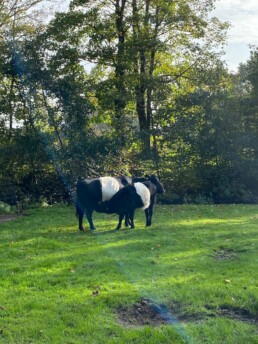
A calf stops feeding on its mother’s milk when it’s ready to find nourishment on its own. It doesn’t reject guidance—it outgrows it. That’s evolution. That’s trust.
The same is true for us.
Let your learning nourish you.
But remember: you are not incomplete.
You are not broken.
You don’t need to chase forever to become whole.
Personal development and the trap of constant seeking
Other Reads
More about my offerings on this link.
About mindfulness on this link.
Learn more about healing your inner child on this link.
External Resources:
Zen & Engaged Buddhism:

There’s No Way Around Your Suffering—Only Through | Reflection
Embracing Your Suffering—Then What?
I’ve been on a journey to discover what lies beneath the surface—beyond the parts of myself I know and understand, and deeper into the unconscious patterns that shape me. Emotional healing by embracing suffering and leading from the heart comes as an insight which I would like to share with you, right now as you read it.
The findings? Eye-opening.
And you may discover the same when you begin to look inward.
Where Do You Begin?
Start by understanding this:
You are not an isolated, standalone being.
Your identity—your emotional core—is deeply shaped by your family of origin: parents, siblings, caregivers.
If you work with a coach or therapist, this is essential ground to explore.
Why? Because this emotional blueprint influences how you respond, connect, and make decisions.
Leading From the Heart vs. the Intellect
When faced with a situation—at home, at work, or anywhere—your first instinct comes from your heart. But most of us are trained to suppress that instinct and respond from the intellect.
The intellect, while valuable, is shaped by layers of past experiences and coping strategies.
But the heart?
The heart holds your purest truth.
What Happens When the Intellect Takes Over?
Over time, we’re shaped by culture, trauma, and the need to belong.
We adapt. We mold ourselves to survive.
This adaptation often suppresses our true nature—our emotions, instincts, and intuition.
It’s like trying to drive your car straight into your office. It’s not meant for that.
The intellect helps you park. But only the heart can help you live.
Leading From the Heart Means Accepting Suffering
We’re wired to avoid pain.
We seek shortcuts. We distract ourselves. We analyze instead of feel.
But the real work—the healing work—requires you to sit with your pain.
To stop bypassing.
To allow yourself to feel fully.
Because true transformation doesn’t happen by skipping the hard parts.
It happens by feeling them through.
What Does This Look Like?
-
Acknowledging your emotions without needing to fix them
-
Sitting with discomfort and learning from it
-
Understanding that your patterns were protective, but they no longer serve you
-
Peeling back the layers of adaptation until you find the truth of who you are
There Are No Shortcuts to Living Fully
You can survive by avoiding pain.
But to truly live? You must go through it.
This is what it means to lead from the heart.
No bypassing. No masks. No shortcuts.
Only presence.
truth.
Only you.
Emotional healing by embracing suffering and leading from the heart.
Other Reads:
More about my offerings on this link.
About mindfulness on this link.
Learn more about healing your inner child on this link.
External Resources:
Zen & Engaged Buddhism: