


How to Transform Self-Sabotage with Mindfulness and Love
How Do We Transform Our Self-Sabotage?
We carry an inherent wisdom within us. Deep down, we know what’s best for us. We often know exactly what we must do to achieve what we want in life. Sometimes, we even know the path—and the means to walk it.
Yet somehow, we still don’t take the first step.
So… how do we transform our self-sabotage?
Self-Sabotage Is a Trickster
Let’s be clear: I don’t believe self-sabotage is some external force we can blame for everything—just like some people tend to externalize the ego.
Self-sabotage is part of us.
And unless we shine a light on our behaviors, it remains a shadow—hindering our happiness, freedom, or whatever it is we seek.
It shifts shapes and forms.
It adapts.
Your self-sabotage might look one way at work… another with your parents… and yet another in your relationship.
But at its core, what does self-sabotage need most to transform?
Self-Sabotage Needs Love
Have you ever noticed how most things in life—especially mental health—begin to soften when met with real, unconditional love?
There’s a saying from where I come from:
“Even rocks can cry.”
(Rocks are as alive as we are—but that’s for another day.)
The point is: anything in us that resists our true knowing, anything that works against our all-knowing nature, is a part of us that is lacking love.
Why is it lacking love?
>Because it was never given any.
>it wasn’t accepted or embraced.
>Because we never saw it as fully ours.
But when you bring love—genuine, ultimate, infinite love—to even your darkest corners… they begin to shift.
They soften.
They transform.
Mindfulness Transforms Self-Sabotage
Mindfulness is the key.
Bringing awareness to your behavior—and reflecting on it with compassion—can help you see the ways in which you hold yourself back.
Whether it’s blocking your own joy, delaying liberation, or avoiding completing a simple task…
There’s often something deeper beneath it.
Many past experiences plant the seeds of self-sabotage:
“I’m not good enough.”
“I don’t deserve this.”
“This is too good for me.”
“This is too bad for me.”
Where do those thoughts come from?
And how can you bring love to the moment in your life when they were formed?
Was it the little you?
The child you?
The teenager?
The young adult?
Maybe… the present you?
Mindfulness and self-reflection—when practiced with love and kindness—can reprogram your inner world.
You shift your self-talk.
You rewrite the script.
And with time, you begin to see your life in a brighter, softer light.
I wish you lightness.
I wish you joy.
And I wish you happiness.
Other Reads:
Why We Mend Our Wounds, Not Heal Them (Yet)? On this link.
Is Awareness the Same as Freedom? On this link.
Feeling Overwhelmed by Personal Growth? On this link.
Learn more about healing your inner child On this link.
External Resources:
Zen & Engaged Buddhism:

Why We Mend Our Wounds, Not Heal Them (Yet)
Why We Mend Our Emotional Wounds (Before We Heal Them)
Over the years, I was under the impression—through what I heard, learned, and hoped—that eventually I would heal from my traumas. That one day, I’d be free from the emotional weight of the experiences that shaped me, especially the difficult ones: Mending emotional wounds.
But lately, something has shifted in my understanding.
I’m realizing I haven’t exactly healed…
What I’ve done is mend.
I’ve tended to the wounds—not erased them.
Healing, I now see, isn’t about forgetting what happened or suddenly feeling "fixed." It's not like a headache you treat with a pill and then forget it existed. Emotional wounds, especially the ones we carry from early life, go deeper than that.
Mending Emotional Wounds: A Practice of Returning to Ourselves
Some wounds go so deep, they become part of how we see the world—and ourselves. And while we can learn to soothe them, care for them, and understand where they come from, they may reopen. Sometimes at the smallest trigger. Sometimes when we least expect it.
Mending doesn’t mean the pain is gone forever. It means we are learning how to tend to the pain with more care, more awareness, and more compassion than we did before.
Over time, these wounds may scar. And those scars can be gentle reminders of where we’ve been—and how far we’ve come.
And maybe—just maybe—within this lifetime, some of those wounds will heal. Maybe the scar fades. Maybe it doesn’t. But we move forward anyway.
Healing Isn’t Instant—and It Isn’t Linear
I want to avoid misguidance.
There is no quick fix.
We don’t “heal” overnight—or even after one coaching journey, therapy session, or moment of clarity.
True healing begins with this simple and powerful truth:
Acknowledging the wound is the beginning—not the end.
It starts with awareness—realizing there’s something within us that still aches.
That ache might show up in our relationships, our work, our sense of self, or how we treat the ones we love.
From there, we begin to ask:
How do I stop the bleeding?
Where did it come from?
And slowly, gently, we begin to apply pressure. We start caring for what hurts. We begin mending.
Sometimes, the wound opens again.
Sometimes, it doesn’t.
But with intention and honesty, we begin to grow from it.
Healing Is the Final Stage—Not the First
Healing isn’t the first step.
It is the result of years of tending.
And in many ways, it might take a lifetime.
But every time we sit with our wounds instead of running from them…
Every time we hold space for what hurts instead of numbing it…
Every time we meet ourselves with compassion instead of shame…
We take a step closer.
You don’t have to be fully healed to live a meaningful life.
But by mending your wounds with care and presence—you might find that you are living more fully than ever before.
Other Reads:
Is Awareness the Same as Freedom this link.
Feeling Overwhelmed by Personal Growth? on this link.
Learn more about healing your inner child on this link.
External Resources:
Zen & Engaged Buddhism:

Is Awareness the Same as Freedom?
Awareness and freedom
Becoming aware isn’t the same as becoming free.
After years of reflecting on mindfulness, I’ve come to question something we often assume: that awareness automatically leads to freedom.
But… does it?
If awareness is the key, what exactly are we becoming aware of?
And if freedom is the outcome, what are we being freed from?
These aren’t just abstract ideas for me—they’ve been real, lived questions.
And over time, I’ve started to see that awareness is not some detached state.
It is always awareness of something.
This insight is one I’ve learned through the teachings of Thich Nhat Hanh and the Plum Village tradition of Buddhism—a path (Buddhism) I’ve been walking for over a decade. And it has stayed with me:
Awareness is always awareness of something.
So it follows:
Freedom is always freedom from something.
What do you want to become aware of and free from?
For me, it was the long-standing impact of being bullied.
If you’ve read the About Me section, you know this experience shaped much of my early self-image. Over the years, I developed defense mechanisms to protect myself—mechanisms that, at some point, stopped serving me.
When I began to look deeply, I could see how this past was still present: in my thoughts, my relationships, and my patterns.
And that’s where awareness became something more than observation—it became a doorway.
A doorway to understanding.
To healing.
To freedom.
What do you want to be free from?
I want to be free from the unconscious protections that were once necessary but are no longer true to who I am today.
I want to live a lighter life.
One not defined by the past, but informed by it.
A life that doesn’t project old wounds onto people I love.
Because by freeing myself…
I free others too.
A question for you:
What is it that you want to become aware of?
What do you want to be free from?
Not in a grand, life-changing way.
But maybe just in this moment, right now.
Bring a little compassion to it.
Let the answers come when they’re ready.
Other Reads:
Here’s more about mindfulness on this link.
Learn more about healing your inner child on this link.
External Resources:
Zen & Engaged Buddhism:

Feeling Overwhelmed by Personal Growth? Here’s What Helped Me
Feeling Overwhelmed by Personal Growth?
The feeling of being overwhelmed by personal growth is common. I’ve experienced it myself—the internal questions like:
“When will I stop feeling like this?”
“When will I finally get better?”
“I’m 36 and I still can’t get a grip on my thoughts when they take over.”
That inner urgency to feel better, especially in darker moments, can be counterproductive. It can make us feel more broken, more behind, more stuck. But there’s something that’s helped me...
The Wisdom of Impermanence
Over 3,000 years ago, a wise teacher said: “Everything is impermanent.”
That includes our thoughts, our emotions, our anxiety—and even our very sense of self as we know it. This simple but profound truth has helped me become a little gentler with myself.
It reminds me that my feelings, no matter how overwhelming, are part of a passing moment. They are real—but they are not permanent.
Being with What Is
Knowing this doesn’t make intense feelings go away. It doesn’t make intrusive thoughts less persistent. But it has changed how I relate to them.
When I’m anxious and overwhelmed, I ask myself: What good will it do to resist what’s already here? To fight the anxiety with more tension? Or to distract myself until I can’t feel anything at all?
Instead, I try to stay present. To acknowledge what’s here with as much gentleness as I can. I try not to flee, but to embrace the moment—because that’s how love and healing begin.
Let It Rain
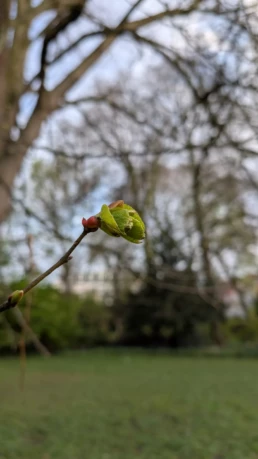
If it rains, let it rain. Pain can bring growth. From the rainfall, buds eventually sprout. And from pain, wisdom can emerge.
This isn’t about glorifying suffering—it’s about trusting that something meaningful can arise when we allow space for what’s truly present.
You already have the answers. The path is within you. What you need most is space, trust, and patience to hear it.
What Helps Me—and Might Help You
Next time you’re in a low moment, try this:
- Sit with your feelings. Let them be exactly as they are.
- Remind yourself: there’s nothing wrong with you.
- Take time off if you need to—cancel the plans, step back from work, create quiet.
- Avoid big decisions. Let clarity come naturally, not under pressure.
- Create a small, gentle routine: for me, it’s washing my face, brushing my teeth, doing yoga (10–45 minutes), and drinking warm water in the morning.
- Journal. It helps me reflect, understand, and check in with what’s really going on.
- After a few days—open the curtains. Let the sun in. Others in. Let yourself come back.
Sometimes the insight comes during the cocooning. Sometimes, it comes after. Either way, it always comes.
Final Thoughts
You are not alone in this. If you're feeling overwhelmed by your personal growth journey, know that it's okay to pause. It's okay to feel. And it’s more than okay to give yourself grace.
You are growing—even when it doesn’t feel like it. Especially then.
Other Reads:
Learn more about my offerings on this link.
Here’s more about mindfulness on this link.
Learn more about healing your inner child on this link.
External Resources:
Zen & Engaged Buddhism:
Healing Starts by Taking Responsibility for Our Inner World
Inner child healing through self-awareness
One of the most profound and difficult truths I’ve encountered on my personal development journey is this: I am responsible for the feelings I carried since childhood—and the belief systems they unconsciously created. These early emotional experiences shaped the lens through which I view myself and the world today. Inner child healing through self-awareness.
Understanding Where It Begins
As children, we’re naturally vulnerable. Our emotional worlds are shaped by interactions with parents, siblings, relatives, peers, and even teachers. When those experiences repeatedly trigger emotional pain—without support or guidance to help us understand them—we begin to internalize those feelings.
Without tools to process them, we store them. We carry them. And over time, they become beliefs:
- “I’m not good enough.”
- “I always mess things up.”
- “I’m not lovable.”
- “I need to prove my worth.”
These beliefs don’t start as thoughts. They start as emotional imprints—formed when we were too young to make sense of what we were feeling.
What Happens When These Feelings Are Left Unprocessed
As renowned physician Dr. Gabor Maté reminds us: “Trauma is not what happens to us, but what happens inside of us.”
If a child is repeatedly left alone in their pain—physically or emotionally—that aloneness becomes its own trauma. Without someone to help them make sense of what they’re feeling, they begin to believe the pain is who they are.
As adults, those unprocessed emotions can manifest as patterns:
- Self-sabotage
- Negative self-talk
- Difficulty trusting others
- Fear of intimacy or rejection
These patterns aren’t flaws. They’re adaptations. They were once protective. But now, they may be holding us back.
You are not broken. You are mending your wounds. They will leave scars and hurt at times! And that process begins the moment you choose to listen inward, with love.
Taking Responsibility Is Not the Same as Self-Blame
One of the turning points in my journey was learning to stop blaming others—and also, to stop blaming myself.
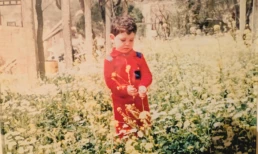
Instead, I chose responsibility. I went back to my younger selves: the five-year-old, the teenager… the version of me that didn’t know what to do with his feelings. And I met him with love.
I forgave him. Held him. & Said: “You didn’t know what to do. And that’s okay.”
Taking back responsibility meant letting go of the weight I placed on others—my parents, my teachers, the bullies, the world—and returning to myself. It didn’t erase the pain, but it gave me back the power to heal.
You Can Begin This Work Too
Healing begins when we stop waiting for others to fix what they didn’t know how to hold in the first place.
You can start by:
- Acknowledging the beliefs you carry that no longer serve you
- Connecting with the younger version of yourself with kindness
- Practicing self-compassion when triggers arise
- Seeking support when needed—because healing doesn’t mean doing it all alone
If this reflection resonates with you, take a moment to sit with it. Breathe. Listen. Your healing doesn’t require perfection—only presence.
Let this be your gentle reminder: You can return to yourself. One breath at a time.
Other Reads:
Learn more about my offerings on this link.
Here is more about mindfulness on this link.
Learn more about healing your inner child on this link.
External Resources:
Zen & Engaged Buddhism:

What Is Mindfulness—And Why Does It Matter for Your Wellbeing?
What Is Mindfulness?
Benefits of mindfulness for mental and physical health
Mindfulness means becoming aware.
It’s that simple—and that profound.
But awareness of what?
That part is up to you.
Think of mindfulness like a flashlight you carry in your pocket. At any moment, you can choose to take it out and shine it somewhere. Wherever the light lands, things become visible—and from visibility, clarity begins.
Mindfulness is the light.
Your breath, body, emotions, thoughts, or even a difficult relationship can be the object of mindfulness.
Without an object to focus on, mindfulness is directionless. But when we bring attention to something intentionally, we begin to soften into the present moment.
What Does It Mean to Be Mindful?
Being mindful is the act of becoming aware.
When I become aware of my breath, for example, my body slowly begins to relax. My thoughts slow down. I start noticing what I’m feeling—maybe joy, sadness, tension, or calm.
From the breath, I can expand awareness to include my posture, the state of my muscles, or the emotions that surface beneath the surface.
This is not passive observation. It’s conscious noticing.
It’s being with what is, without needing to fix it.
How Do I Practice Mindfulness?
The good news? It’s not rocket science.
Mindfulness begins with a few quiet minutes. Sit upright in a chair or on a cushion. Close your eyes if that feels comfortable. Begin noticing your breath—just as it is.
You’ll get distracted. That’s normal.
Gently return your attention to the breath.
Inhale… Exhale…
This moment becomes a pause in your day. A reset. A return to yourself.
It may seem simple—too simple, even—but over time, it becomes a powerful anchor in your life.
Why Is Mindfulness Important?
Benefits of mindfulness for mental and physical health
In a world that pulls us in all directions, mindfulness brings us home.
It helps regulate your nervous system, ease stress, clarify your thoughts, and connect you with the stillness already within you.
Whatever is happening outside—mindfulness offers a way to stay grounded, present, and well.
Other reads you might be interested in:
Learn more about my offerings on this link.
Learn more about healing your inner child on this link.
External Resources:
Zen & Engaged Buddhism:

Check-In in the Here and Now
Mindfulness reflection in times of emotional overwhelm
Hello, dear friend.
It’s been a while.
So let me ask: How are you?
Not the “I’m fine” version.
But how are you—really?
Have you felt your sadness creeping in lately?
Have you numbed it with distractions, filled the silence with noise, scrolled until your breath faded into the background?
Have you smiled for others, while forgetting to smile for yourself?
Have you questioned your worth, your place, your presence?
Have you chased something “better,” again and again, only to find yourself standing in the same spot, holding the same ache?
Have you worn your sadness for years—quietly, like a second skin?
If so, you are not alone.
And if you’ve asked yourself these questions lately, then maybe…
This is your invitation to pause.
To undress the sadness.
To sit in silence.
To meet yourself with the tenderness you’ve given others.
Breathe.
Touch your heart.
And ask again: How am I, really?
Learn more about my offerings on this link.
Learn more about mindfulness on this link.
Learn more about healing your inner child on this link.
External Resources:
Zen & Engaged Buddhism:

Are you near a mental and physical fatigue? Here is why and how to deal with your thoughts.
Mental and physical fatigue and how to manage your thoughts?
Sometimes, it feels like you’re just trying to keep your head above water.
That feeling can be heavy. It’s not permanent—but it can go either way:
toward healing, or deeper into depletion.
The direction? It’s yours to choose.
Mental and physical fatigue and how to manage your thoughts
What Keeps You Hustling?
Start with the mind.
Your mind is powerful. It’s beautiful. And it’s not broken.
A Buddhist metaphor suggests the mind is like a screen—we project onto it all kinds of films. Thoughts, emotions, stories, expectations, judgments… We begin to believe what we project, forgetting it’s just a movie, not the truth.
The “musts,” “shoulds,” and “have tos” are often self-created.
They stem from internal pressure, not reality. And when you realize that,
you can begin to loosen their grip.
A Little Awareness Can Break a Big Pattern
It only takes a moment of awareness to notice:
-
What am I thinking right now?
-
How am I reacting to this thought?
-
Do I want to keep believing it?
That pause—that awareness—is the beginning of change.
You Are Already Whole
You don’t need to be fixed.
You have the strength, knowledge, and capacity to begin shifting your patterns.
But that doesn’t mean you have to do it alone.
Asking for help isn’t weakness.
It’s a powerful decision. A courageous one.
Wanting guidance isn’t shameful. It’s human.
The mind may tell you otherwise, but remember: thoughts are not facts. You decide which stories to believe.
Take the First Step Back to Yourself
Start small.
With one breath.
One question.
An act of kindness toward yourself.
You’re not alone in this.
Learn more about my offerings on this link.
More about mindfulness on this link.
Learn more about healing your inner child on this link.
External Resources:
Zen & Engaged Buddhism:

Reclaiming Your Self-Worth: You Are as Beautiful as a Sunrise
Why Do You Feel You’re Not Worth It?
How often do you do something just for you?
Take yourself out for ice cream?
Book a massage?
Sit down with a journal or a hot tea and tend to your inner world?
Self-investment is an act of self-worth.
It tells you: I matter. I’m worth caring for.
But what if you’re not there yet?
What if you feel undeserving of rest, joy, or kindness?
And deep down, you feel you’re not “enough” to receive any of it?
The excuses show up:
“I’m too busy.”
“My kids need me.”
“My relationship is demanding.”
“I’m exhausted.”
The list goes on.
But have you looked yourself in the mirror—truly looked—and asked why you’re putting yourself last?
How to rebuild self-worth and overcome inner criticism
What’s Blocking You From Seeing Your Worth?
That inner belief—that you are not enough—didn’t come from nowhere.
It may have started in childhood:
A punishing parent. Emotional neglect. Verbal abuse.
Moments that made you feel like your needs were too much, your voice too loud, your softness too weak.
Unhealed trauma creates stories we carry for decades.
Stories that whisper: You’re not worth it.
Not worth care.
or the love.
Not even your own kindness.
But none of that is true.
How Do You Start Loving Yourself Again?
Start small.
Whisper something kind to yourself in the mirror.
Say it out loud if you can.
Look into your own eyes and say:
“I’m worthy of care.”
“I’m still here. And that matters.”
Remember your resilience.
And the joy you’ve given others.
Remember the steps you’ve taken to reach where you are.
You Deserve to Be Taken Care Of—By You
You shine—just like a sunrise.
Every single morning.
Whether you see it or not.
And like the sunrise, your beauty doesn’t depend on someone else noticing it.
It’s just there.
Unfolding. Quiet. Undeniable.
How to rebuild self-worth and overcome inner criticism
Other reads:
More about my offerings on this link.
About mindfulness on this link.
Learn more about healing your inner child on this link.
External Resources:
Zen & Engaged Buddhism:

Clinging and the art of letting go
How Many Times Have You Had to Let Go?
Think of the moments you’ve had to let go—voluntarily or not.
A person. A pet. A job. A dream. A version of yourself.
Loss is part of life, and yet, letting go never seems to get easier.
Take a moment: can you recall your most recent experience of loss?
What did it feel like?
Whether it’s a breakup, the passing of a loved one, a shift in career, or something as small as a childhood pet—you may notice a pattern in how you deal with it.
A Lesson from a Small Loss
Recently, my niece lost her hamster. For her, this was the first tangible experience of loss within her household.
She has a few choices:
-
She can cling to the memory and wish it never happened
-
She can mourn, accept the loss, and move forward
-
Or she can suppress her feelings and pretend the hamster never existed
And that third option? It’s the most dangerous. Because what’s suppressed doesn’t disappear. It resurfaces—often disguised as something else, in moments we least expect.
As Adults, We Do the Same
Clinging isn’t just about pets or relationships.
It’s about the emotional patterns beneath them.
-
Maybe you cling to people because you fear abandonment
-
Or hold tightly to a job title because it validates your worth
-
You might rush to replace loss because you can’t tolerate emptiness
The cling itself is not the problem. It’s a symptom.
What’s underneath?
A Few Questions to Ask Yourself
-
What am I clinging to right now?
-
What deeper wound might be fueling this attachment?
-
Am I looking outward for something I need to cultivate within?
-
What memory or emotion needs my attention and compassion?
Letting Go Is Not Abandonment—It’s a Return
When you begin to recognize your attachments with curiosity—not shame—you begin the process of release.
Letting go doesn’t mean you stop loving or caring.
It means you stop outsourcing your wholeness.
You return home to yourself.
And from there, you realize:
You are enough.
You are worthy of joy.
And capable of holding yourself through loss—and still choosing love.
Other Reads
More about my offerings on this link.
About mindfulness on this link.
Learn more about healing your inner child on this link.
External Resources:
Zen & Engaged Buddhism: